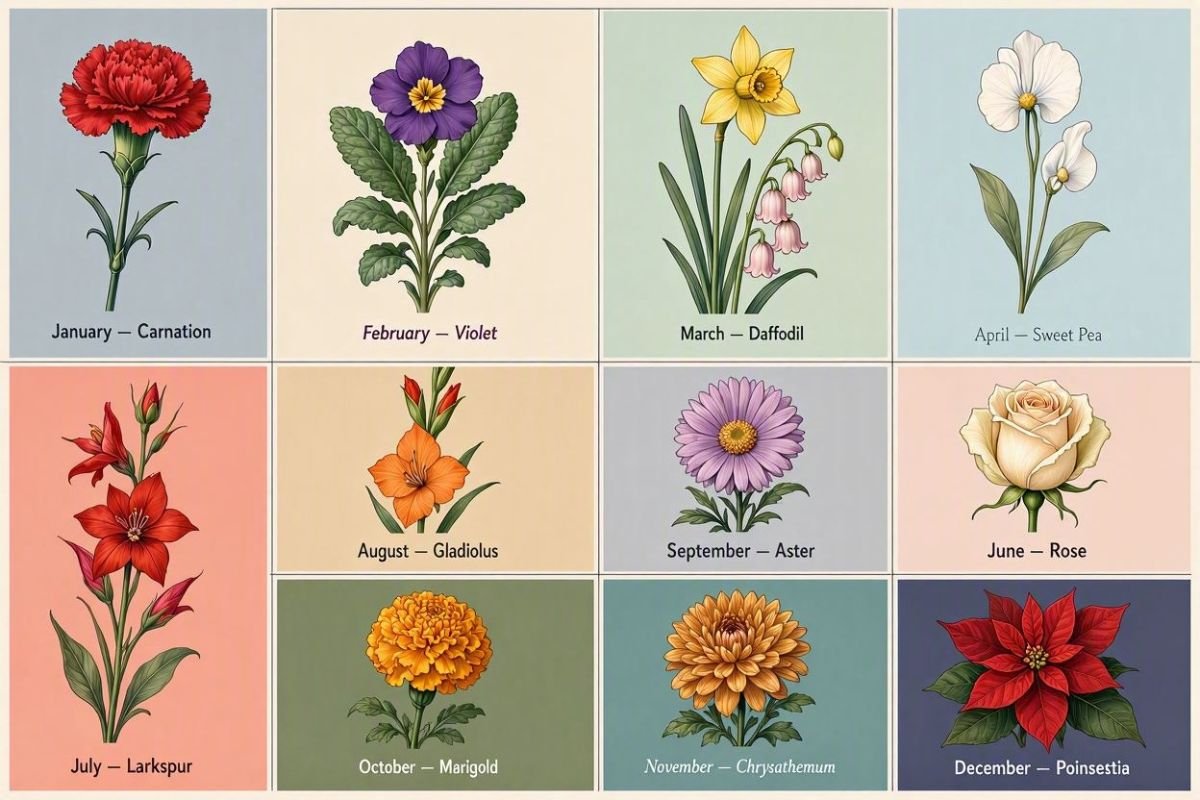
If you’ve ever wondered whether your birth month has a flower with its own story, meaning, and symbolism, you’re not alone. Birth flowers are a tradition much like birthstones, with each month connected to one or more flowers that represent ideas such as love, hope, loyalty, strength, joy, and new beginnings.
But birth flowers are more than a simple list of flowers assigned to each month. Their meanings have developed through centuries of folklore, cultural traditions, Victorian-era floriography, seasonal blooming patterns, and modern gift-giving customs. Even the color of a flower can change its traditional meaning, making the story behind each birth flower more interesting than it might first appear.
In this guide, you’ll discover the birth flowers for every month from January through December, what each flower symbolizes, why it became associated with that particular month, and how different flower colors can add another layer of meaning. You’ll also find a quick comparison table and practical gift ideas to help you choose a meaningful flower for yourself, a friend, or someone celebrating a birthday.
January Birth Flowers: Carnation and Snowdrop
January’s primary birth flower is the carnation, symbolizing love, fascination, and distinction. Carnations come in a wide range of colors, and in Victorian flower language, each shade carried a slightly different meaning: pink for a mother’s love, red for deep affection, and white for purity. Carnations became linked to January partly because they were among the few flowers reliably available and long-lasting through winter months, before greenhouse growing made most flowers available year-round.
The secondary flower, the snowdrop, represents hope and rebirth. As one of the first flowers to bloom through late winter snow, often pushing up while frost is still on the ground, it’s long been associated with the idea that better days are ahead, even in the coldest part of the year.
February: Violet and Primrose
The violet, February’s primary flower, symbolizes loyalty, faithfulness, and modesty. Its delicate, understated appearance has made it a long-standing symbol of quiet devotion rather than bold romantic gestures, a fitting association for a month centered on Valentine’s Day and steady, ongoing affection rather than grand declarations.
Primrose, the secondary flower, represents young love and new beginnings. It’s one of the earliest perennials to bloom as late winter starts to break, which contributed to its association with the first stirrings of affection and the start of something new.
March: Daffodil
March’s birth flowers, the daffodil, symbolizes rebirth, new beginnings, and unmatched love. As one of the earliest flowers to bloom as winter turns to spring, it’s become a strong symbol of renewal and hope, often associated with overcoming difficult periods.
In many cultures, gifting a bunch of daffodils, rather than a single stem, is considered good luck, while a single daffodil is sometimes thought to bring misfortune, a superstition tied to the flower’s abundant, cluster-like blooming pattern.
April: Daisy and Sweet Pea
The daisy, April’s primary birth flower, represents innocence, purity, and loyal love. Its simple, open form has made it a symbol of true feelings and honest affection across many cultures for centuries. Daisies are among the earliest common wildflowers to bloom as spring takes hold, which reinforced their association with fresh starts and uncomplicated affection.
Sweet pea, the secondary flower, symbolizes blissful pleasure and gratitude. It was often given as a way to say thank you for a lovely time, a tradition that still shows up in modern floral gifting, and its fragrant, ruffled blooms made it a popular choice in spring gardens by the time April arrives.
May: Lily of the Valley
May’s birth flower, lily of the valley, symbolizes humility, sweetness, and a return of happiness. Its delicate, bell-shaped white blossoms have made it a popular choice for spring weddings, including notably serving as part of royal wedding bouquets.
Despite its delicate appearance, lily of the valley is actually toxic if ingested, a detail worth knowing if you’re growing it around children or pets, even though its symbolic meaning remains
June: Rose
June’s birth flower, entirely positive.
The rose is one of the most universally recognized symbols in flower language, primarily representing love, but its meaning shifts significantly depending on color. Red roses symbolize romantic love, yellow roses represent friendship, and white roses are tied to purity and new beginnings.
The rose’s association with June specifically traces back to ancient Rome, where the flower was already deeply tied to Venus, the goddess of love, well before the modern birth flower tradition took shape.
July: Larkspur and Water Lily
Larkspur, July’s primary birth flower, symbolizes strong bonds of love and positivity. Its tall, colorful spikes bloom in full during peak summer, which is part of why it became tied to July specifically, and it has also traditionally symbolized an open heart and lightheartedness.
The water lily, July’s secondary flower, represents purity and majesty. Its ability to bloom on the water’s surface in the height of summer heat, rooted below but reaching toward the light, has long made it a symbol of enlightenment and rising above difficulty.
August: Gladiolus and Poppy
Gladiolus, August’s primary flower, symbolizes strength of character, integrity, and remembrance. Its name comes from the Latin word for “sword,” reflecting the flower’s tall, blade-like leaves and its long-standing association with strength and honor.
The poppy, August’s secondary flower, carries a more complex symbolism, representing both remembrance and, historically, eternal sleep. Its association with remembrance became especially prominent after World War I, when red poppies became a lasting symbol of fallen soldiers.
September: Aster and Morning Glory
Aster, September’s primary birth flower, symbolizes love, wisdom, and faith. Its name comes from the Greek word for “star,” referring to its star-shaped petals, and it has carried associations with patience and elegance for centuries, largely because it blooms late in the season, after most summer flowers have already faded.
Morning glory, the secondary flower, represents affection and the fleeting nature of life. Its blossoms open at dawn and close by early afternoon, a daily cycle that gave the flower its association with new beginnings and appreciating each moment as it comes.
October: Marigold and Cosmos
Marigold, October’s primary flower, symbolizes passion, creativity, and warmth. Its vivid orange and gold tones bloom heavily in early fall, which strongly ties it to the seasonal shift October represents, and it holds significant cultural meaning in celebrations like Día de los Muertos, where it’s believed to guide spirits home.
Cosmos, the secondary flower, represents order, harmony, and peace. Its name comes from the Greek word for “ordered universe,” reflecting the balanced, symmetrical pattern of its petals, and like marigolds, it tends to bloom well into autumn, extending color into a month when many other flowers have already faded.
November: Chrysanthemum
November’s birth flower, the chrysanthemum, symbolizes friendship, joy, and well-wishing, though in some cultures it carries a more solemn meaning. Chrysanthemums are one of the last flowers to bloom heavily before winter fully sets in, which tied them naturally to the final full month of autumn. In the US and much of Western culture, the flower is associated with optimism and cheerfulness, while in parts of Europe and Asia, it’s more closely tied to remembrance and funerals.
Chrysanthemums come in an especially wide range of colors and forms, and their meaning can shift slightly depending on the shade, similar to roses, with red typically symbolizing love and yellow representing gentle sadness or slighted love in traditional Victorian flower language.
December: Narcissus and Holly
Narcissus, December’s primary flower, symbolizes hope, wealth, and good fortune, particularly around the new year. In Chinese culture specifically, the narcissus is strongly associated with prosperity and is often displayed during Lunar New Year celebrations.
Holly, the secondary flower, represents protection and goodwill. Its evergreen leaves and bright red berries have made it a long-standing symbol of winter resilience, closely tied to the winter holiday season across many Western traditions.
Birth Flowers at a Glance
| Month | Primary Flower | Secondary Flower | Main Meaning |
| January | Carnation | Snowdrop | Love & Hope |
| February | Violet | Primrose | Loyalty & New Beginnings |
| March | Daffodil | — | Rebirth |
| April | Daisy | Sweet Pea | Innocence & Gratitude |
| May | Lily of the Valley | — | Humility & Happiness |
| June | Rose | — | Love (varies by color) |
| July | Larkspur | Water Lily | Positivity & Purity |
| August | Gladiolus | Poppy | Strength & Remembrance |
| September | Aster | Morning Glory | Wisdom & Affection |
| October | Marigold | Cosmos | Passion & Harmony |
| November | Chrysanthemum | — | Friendship & Joy |
| December | Narcissus | Holly | Hope & Protection |
Birth Flower Colors and Their Meanings
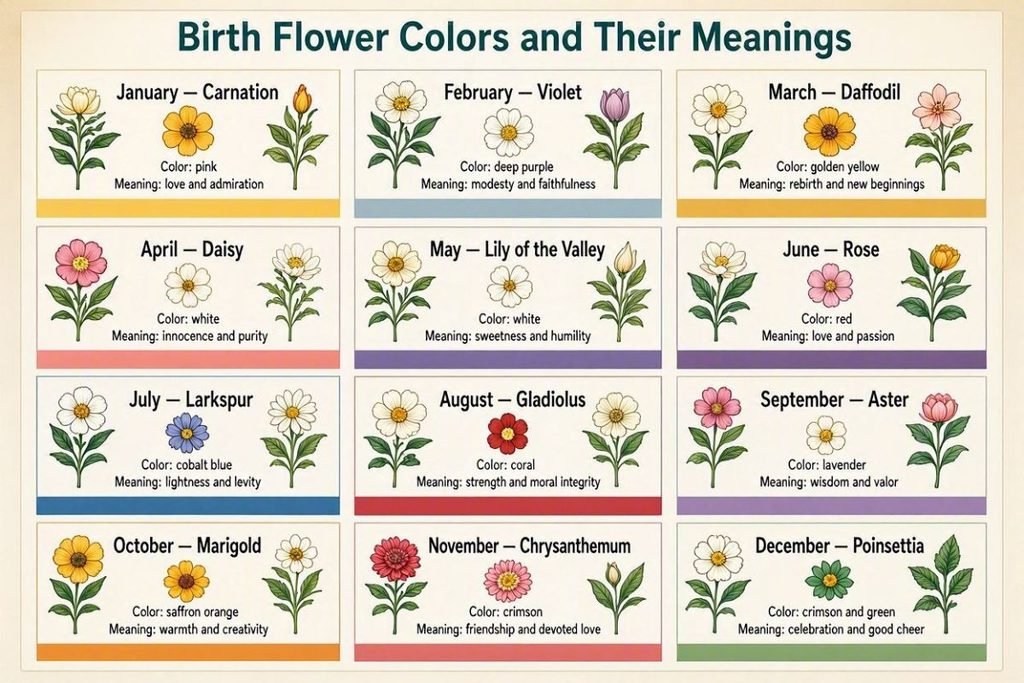
Beyond the month itself, the color of a flower often changes its meaning, especially for flowers like roses, carnations, and chrysanthemums that come in many shades.
- Red rose — romantic love and passion
- Yellow rose — friendship and joy
- White rose — purity and new beginnings
- Pink carnation — a mother’s love or gratitude
- Red carnation — deep affection and admiration
- White carnation — purity and good luck
- Yellow chrysanthemum — in traditional Victorian flower language, slighted love or gentle sadness, though in modern Western use it more often simply signals cheerfulness
- Purple aster — wisdom and dignity
- Orange marigold — passion, warmth, and creativity
When choosing a flower as a gift, color can matter as much as the species itself, so it’s worth considering both together rather than picking based on month alone.
How to Choose a Birth Flower Gift
Once you know a birth flower’s meaning, there are several practical ways to actually use it.
- A birthday bouquet. The most direct option, either a single-flower arrangement or one mixed with complementary blooms in a similar color palette.
- A personalized card or print. Illustrated birth flower prints or cards are a lasting alternative to fresh flowers, especially for someone who prefers keepsakes.
- Jewelry or home décor. Birth flower motifs show up in pressed-flower jewelry, candles, and small decorative pieces, offering a subtler nod to the meaning.
- A social media birthday message. Mentioning someone’s birth flower and its meaning in a birthday post or message adds a personal, researched touch that a generic “happy birthday” doesn’t.
- A planted gift. For flowers that grow well in pots, gifting a live plant instead of cut flowers gives the recipient something that lasts well beyond the day itself.
Frequently Asked Questions
Before choosing a birth flower for yourself or someone special, it helps to understand how these traditions developed and why different flowers are connected with different months. The FAQs below answer some of the most common questions about birth flowers, their meanings, traditions, and how to choose the right one. Whether you are learning about your own birth flowers or looking for a meaningful birthday gift, these answers can help you make sense of the symbolism.
Why do some months have two birth flowers?
Many months developed two associated flowers over time as different cultures and eras layered their own traditions onto the original list, and both are now generally considered valid, giving people more than one option to choose from.
Where did the birth flower tradition come from?
The modern tradition largely traces back to Victorian-era England, when flower symbolism, sometimes called floriography, became a popular way to express feelings that weren’t always spoken aloud directly. The specific month-by-month list has evolved somewhat since then, which is why slight variations exist across different sources.
What is my birth flower if I don’t know my birth month’s flower?
Find your birth month in this guide and look at the primary flower listed for it. If a month has two flowers, either is considered your birth flower, and many people choose based on which meaning or appearance they personally prefer.
Are birth flower meanings the same everywhere in the world?
Not always. While many meanings are widely shared, especially in Western floriography traditions, some flowers carry different or additional meanings in other cultures, such as the chrysanthemum’s association with remembrance in parts of Europe and Asia versus friendship and joy in the US.
Birth flowers carry centuries of meaning behind something as simple as a bloom, whether that’s the quiet devotion of a violet or the late-blooming resilience of an aster. Knowing the story behind your own birth flower adds a layer of meaning to something you might otherwise pass by without a second look.

Azrar Chattha is the founder and content creator of The Daily Knowledge. He is passionate about sharing inspiring blessings, prayers, quotes, wishes, and informative articles that educate, motivate, and bring positivity into people’s lives. His mission is to provide reliable, valuable, and easy-to-understand content that helps readers learn something new every day.