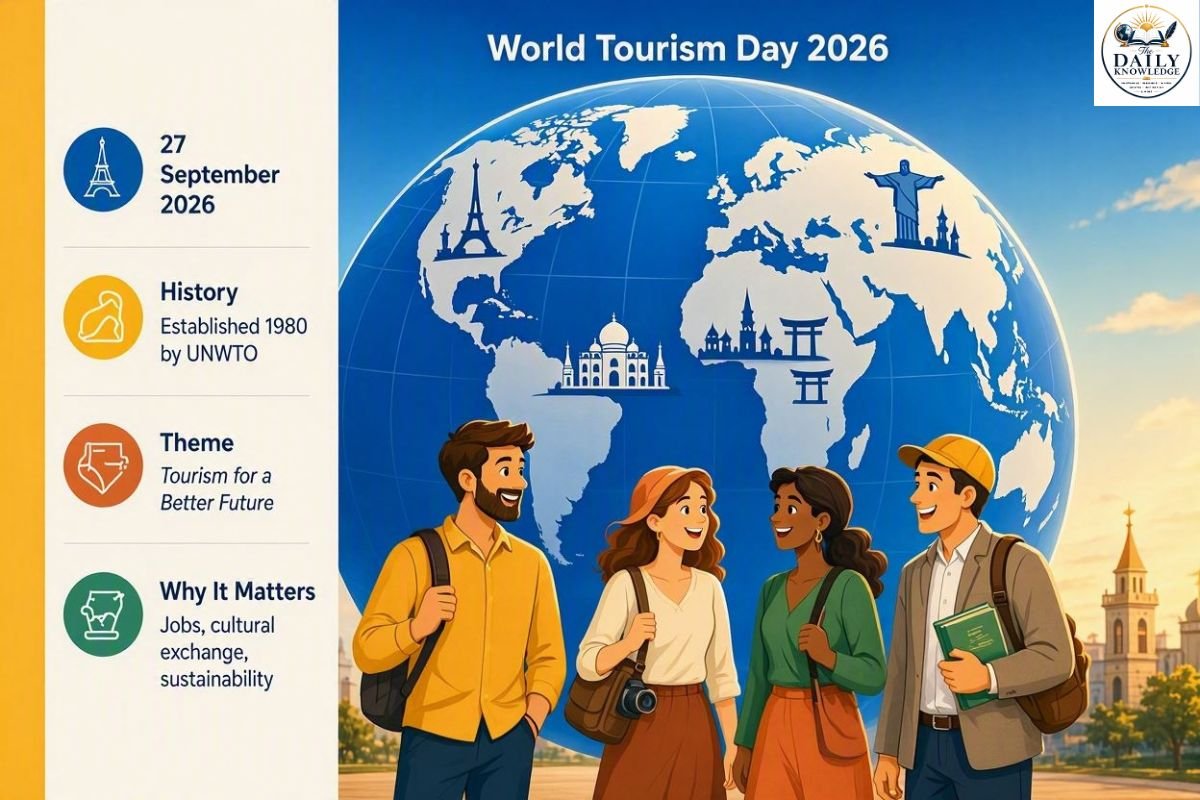
World Tourism Day 2026 is more than a celebration of travel. Observed on September 27, the day highlights how tourism connects people, supports local economies, creates jobs, preserves cultural heritage, and influences the communities travelers visit. But tourism is also changing rapidly as technology and artificial intelligence begin to reshape how people plan trips, discover destinations, communicate, and experience the world.
In 2026, El Salvador will host the official World Tourism Day celebrations in San Salvador, with the theme “Digital Agenda and Artificial Intelligence to Redesign Tourism.” The theme puts a timely question at the center of this year’s observance: how can new technology make tourism more innovative and accessible while still benefiting travelers, workers, local communities, and destinations?
In this guide, you’ll learn when World Tourism Day 2026 takes place, how the observance began, why September 27 was chosen, what the 2026 theme means, and how AI and digital technology could influence the future of tourism. We’ll also look at tourism’s impact on jobs, small businesses, local communities, and sustainable travel.
When Is World Tourism Day?
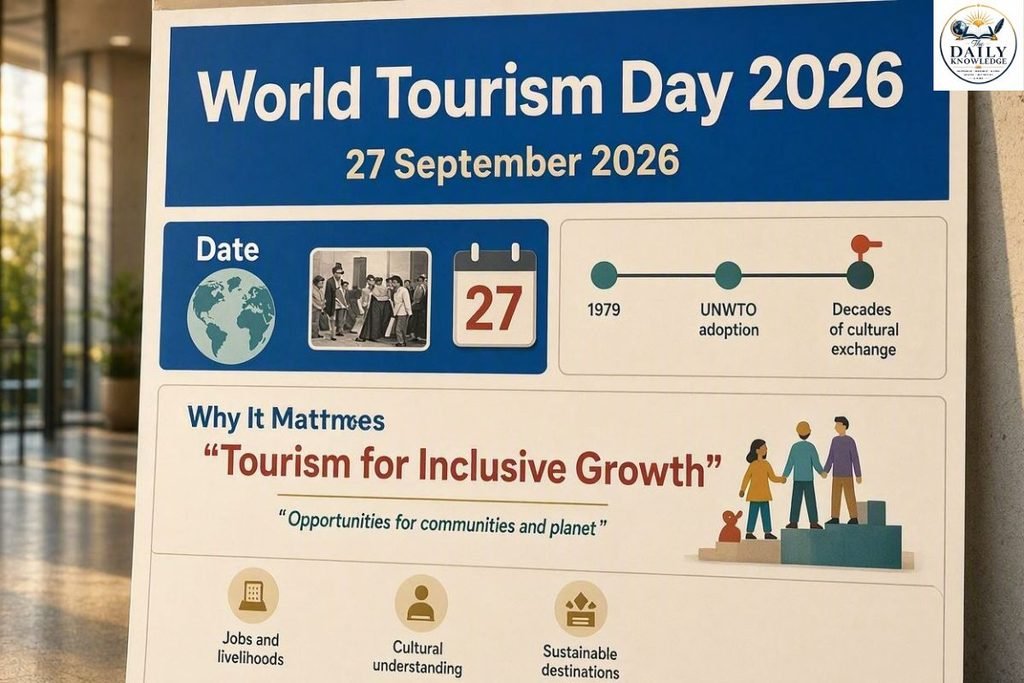
World Tourism Day is observed every year on September 27. It has been held on this date annually since 1980, making 2026 one of more than four decades of continuous observance.
What Is World Tourism Day?
World Tourism Day is an international awareness day highlighting tourism’s social, cultural, political, and economic value. It’s organized by UN Tourism (formerly known as the World Tourism Organization, or UNWTO), the United Nations agency responsible for promoting responsible, sustainable, and universally accessible tourism.
The day is meant to shift the conversation around travel beyond leisure alone, drawing attention to how tourism supports jobs, small businesses, cultural preservation, and international cooperation.
The History of World Tourism Day
The observance was established by the World Tourism Organization in 1979, with the first World Tourism Day celebrated on September 27, 1980, following a meeting of the World Tourism Organization General Assembly in Torremolinos, Spain.
On December 23, 2003, the World Tourism Organization became a specialized agency of the United Nations. It is now known as UN Tourism, and it has continued to lead the observance, coordinating a different host country each year to lead the central celebrations while individual nations and organizations run their own local events.
Why Was September 27 Chosen?
The date commemorates the adoption of the World Tourism Organization Statutes on September 27, 1970, an important milestone in the organization’s history. Choosing this date tied the observance directly to the organization’s own founding milestone.
The date was also considered seasonally appropriate because it falls near the end of the high tourism season in the Northern Hemisphere and the beginning of the season in the Southern Hemisphere.
The Role of UN Tourism
UN Tourism is the United Nations agency responsible for promoting tourism as a driver of economic growth, inclusive development, and environmental sustainability. Beyond organizing World Tourism Day, the agency works with governments and tourism bodies worldwide on policy, statistics, and sustainable development goals connected to travel.
Each year, UN Tourism designates a host country for the central World Tourism Day celebrations. For 2026, that host is El Salvador, with the official celebration taking place in San Salvador on September 27, continuing a rotation that has included countries across different regions in past years.
World Tourism Day 2026 Theme
The official theme for World Tourism Day 2026 is “Digital Agenda and Artificial Intelligence to Redesign Tourism.” The theme centers on how digital transformation and AI are reshaping the tourism sector, with a focus on driving innovation while working toward a more inclusive and accessible industry.
The theme also highlights the need for digital transformation to benefit a wider range of travelers, tourism workers, local communities, and destinations. UN Tourism has emphasized that AI and technology should support more inclusive and sustainable tourism rather than leave smaller or emerging destinations behind.
How AI Could Change Tourism
The 2026 theme points to several practical ways artificial intelligence is already shaping, or expected to shape, the tourism industry.
- Personalized travel recommendations. AI tools can help travelers find destinations, accommodations, and activities suited to their preferences and budget.
- AI-powered customer service. Chatbots and virtual assistants are increasingly used to handle bookings, answer questions, and provide support across time zones.
- Translation and accessibility tools. Real-time translation technology can reduce language barriers for travelers and make destinations more accessible to a wider range of visitors.
- Destination management and planning. Tourism boards and local governments can use data and AI tools to manage visitor flow, reduce overtourism in popular sites, and plan infrastructure more effectively.
How Tourism Affects Jobs and the Economy
Tourism is a major source of employment worldwide, supporting jobs across transportation, hospitality, food service, guiding, retail, and many related industries. Recent UN SDG data show that tourism industries accounted for roughly 1 in 20 employed people worldwide in 2024, based on data from 134 countries.
For many countries, tourism represents a significant share of GDP and foreign exchange earnings. Major disruptions such as the COVID-19 pandemic have shown how quickly declines in travel can affect employment, businesses, and local economies across the tourism value chain.
Why Tourism Matters for Local Communities and Small Businesses
Beyond large hotel chains and airlines, tourism often provides direct income to small, locally owned businesses, family-run guesthouses, independent restaurants, local guides, and artisans selling regional crafts. In some communities, tourism can provide important opportunities for income and employment, particularly where other industries are limited.
This is part of why sustainable tourism has become such a central theme in recent years. Tourism that respects local communities tends to keep more economic benefit within the region itself, rather than concentrating profits with large, external companies.
What Is Sustainable Tourism?
Sustainable tourism refers to travel practices that account for their long-term economic, social, and environmental impact, aiming to meet the needs of travelers and host communities without compromising resources for future generations. It considers factors like environmental conservation, fair treatment of local workers, and preserving cultural heritage rather than diluting it for mass appeal.
In practice, this can include choosing locally owned accommodations and businesses when appropriate, respecting cultural sites and traditions, reducing environmental impacts, and helping ensure tourism revenue benefits host communities.
How Is World Tourism Day Observed Around the World?
Observance varies widely depending on the country and organization involved. Possible activities include educational programs, tourism conferences, cultural exhibitions, social-media campaigns, and special events organized by tourism organizations or local authorities.
- Official UN Tourism events. The host country leads a central conference and celebration, drawing tourism officials and industry leaders from around the world.
- National and local events. Many countries hold their own tourism-focused conferences, cultural exhibitions, or public celebrations tied to the day.
- Educational programs. Schools, universities, and tourism organizations may use the day to discuss tourism’s role in the economy, culture, and sustainability.
- Social media campaigns. Individuals and organizations share travel stories, tips, and reflections using hashtags like #WorldTourismDay.
Interesting Facts About World Tourism Day
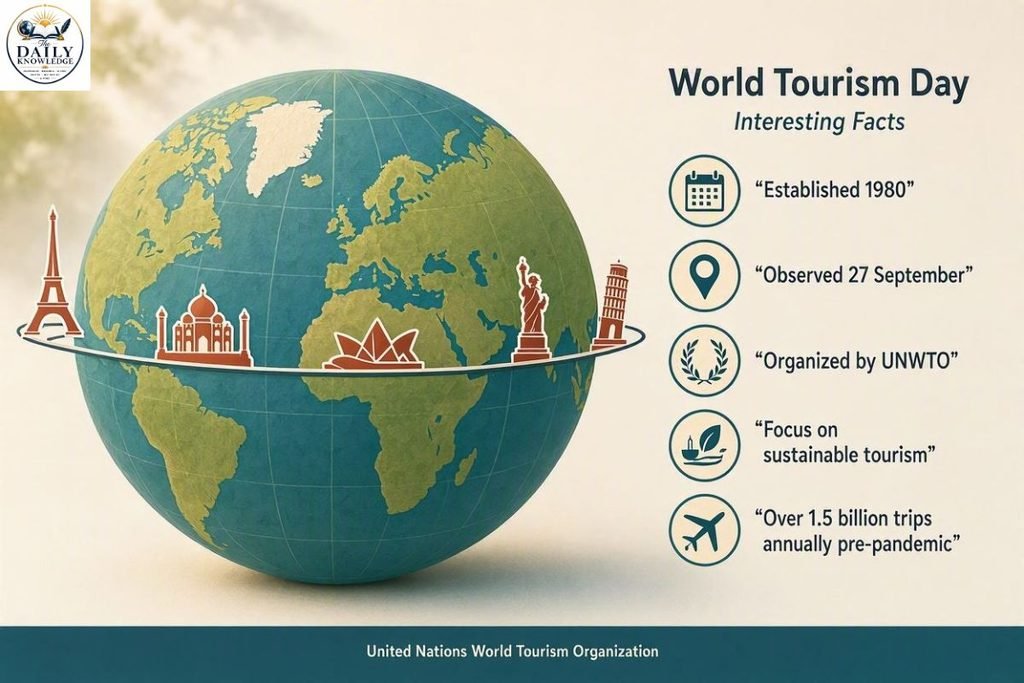
- The observance has been held every year since 1980, without interruption.
- UN Tourism became a specialized agency of the United Nations in 2003.
- Each year, a different country hosts the celebration, allowing different regions to lead the central event.
- The 2026 host country, El Salvador, will lead the official celebration in San Salvador.
Frequently Asked Questions
When is World Tourism Day in 2026?
World Tourism Day 2026 falls on Sunday, September 27, 2026, the same date it’s observed every year.
What is the World Tourism Day 2026 theme?
The official 2026 theme is “Digital Agenda and Artificial Intelligence to Redesign Tourism,” focusing on how digital innovation and AI are reshaping the tourism industry.
Who organizes World Tourism Day?
UN Tourism, the United Nations specialized agency formerly known as UNWTO, organizes World Tourism Day and coordinates a different host country each year.
Is World Tourism Day the same as National Tourism Day?
No. World Tourism Day is the internationally recognized UN observance held on September 27. Some individual countries separately observe their own “National Tourism Day” on different dates, focused specifically on domestic travel and tourism within that country.
Is World Tourism Day a public holiday?
World Tourism Day is not a worldwide public holiday. It’s a United Nations observance, and countries and organizations may hold events or campaigns to mark the day, but September 27 is not automatically a day off from work or school.
World Tourism Day is more than a symbolic date on the calendar. Each year’s theme highlights an important issue or development affecting tourism, while the 2026 theme focuses specifically on digital transformation and artificial intelligence.

Azrar Chattha is the founder and content creator of The Daily Knowledge. He is passionate about sharing inspiring blessings, prayers, quotes, wishes, and informative articles that educate, motivate, and bring positivity into people’s lives. His mission is to provide reliable, valuable, and easy-to-understand content that helps readers learn something new every day.
2 thoughts on “World Tourism Day 2026: Date, History, Theme, and Why It Matters”