
You start strong — new diet, daily workouts, an earlier bedtime. Then work gets busy, motivation fades, and by week two you’re back where you started. If this cycle feels familiar, the problem isn’t your willpower. It’s that most healthy habits are built on motivation instead of a system that works even on the days you don’t feel like it.
This guide breaks down the actual psychology of habit formation — the habit loop, why small habits outperform ambitious ones, and a realistic plan for making change that lasts, not just for a few weeks.
The Habit Loop: Why Some Actions Become Automatic
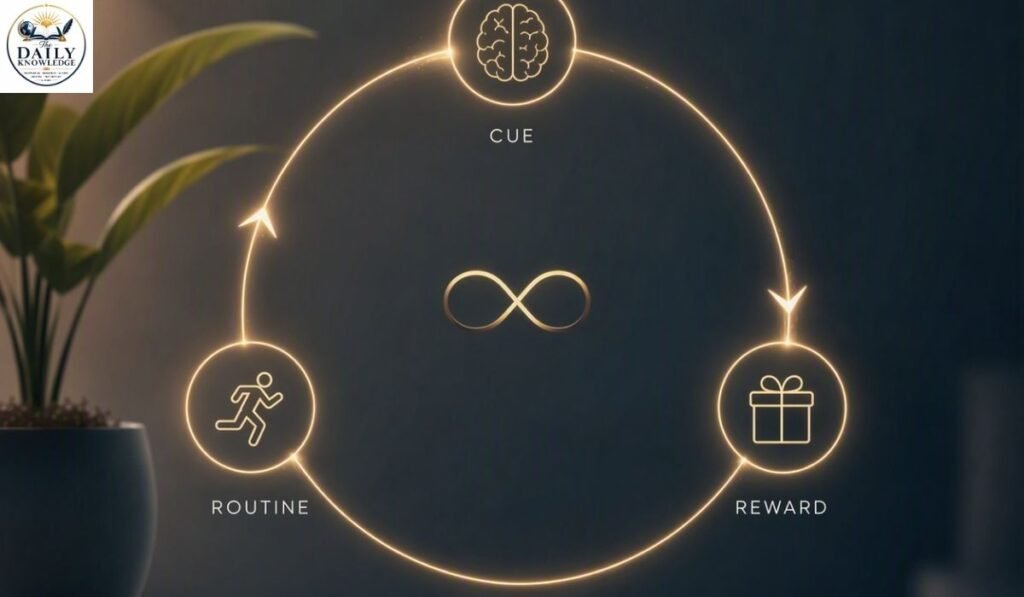
Every habit — good or bad — follows the same cue-craving-response-reward cycle identified by habit researchers.
A cue (waking up, finishing lunch, feeling stressed) triggers a craving (for energy, comfort, relief). That craving drives a response — the habit itself, whether it’s a walk or a scroll through social media. If the response delivers a reward (better mood, relief, satisfaction), your brain remembers, and the loop repeats until it’s automatic.
This explains why willpower alone rarely works long-term: you’re fighting an automatic loop with conscious effort, which is exhausting to sustain. The more effective approach is redesigning the cue and response, not just resisting the craving.
Why Ambitious Goals Usually Fail
Deciding to exercise two hours daily, cut out sugar entirely, and wake up at 5 a.m. — all at once — sounds motivating on day one. By day five, it’s usually abandoned. Your brain resists large behavioral changes; when a new habit demands too much, motivation runs out before the behavior becomes automatic.
Start with something too small to fail. Five minutes of walking instead of an hour. One page instead of a chapter. Two minutes of meditation instead of thirty. This isn’t about staying small forever — it removes the resistance that kills most habits in their first week, and once you start, you’ll often do more than planned anyway. If you want to run, start with a brisk 10-minute walk before jumping to a training plan. If you want to eat less sugar, swap one dessert a day for a piece of fruit rather than cutting sugar out entirely on day one.
Reduce Friction, and Habits Get Easier Automatically
USC research psychologist Wendy Wood, author of Good Habits, Bad Habits, found that people form habits largely based on what’s easiest to do — not what they’re most motivated to do. She calls the resistance between you and a behavior friction: the more steps between you and the habit, the less likely you are to follow through, regardless of how much you want to.
This reframes habit-building as an engineering problem, not a willpower problem. If getting dressed for the gym feels like a chore, that friction — not lack of motivation — is often what keeps you on the couch.
Set Goals That Actually Direct Behavior
Vague goals like “be healthier” give your brain nothing to act on. Specific, measurable goals do:
- Specific: “Eat one serving of vegetables with dinner” instead of “eat healthier.”
- Measurable: Track it — steps walked, glasses of water, hours slept.
- Achievable: Match the goal to your actual current routine, not an idealized one.
- Time-bound: “For 30 days” or “three times a week” gives the habit a concrete shape.
Build Identity, Not Just Outcomes
Outcome goals (“I want to lose weight“) motivate you to start. Identity-based habits (“I’m someone who takes care of my body”) are what keep you going after the initial motivation fades. Each time you complete the habit, it becomes evidence supporting that identity — which makes the next repetition easier, not harder.
Use Habit Stacking to Skip the Memory Problem
Habit stacking means attaching a new habit to one you already do automatically, so the existing habit becomes the reminder for the new one:
- After brushing your teeth → drink a glass of water.
- After your morning coffee → stretch for five minutes.
- After lunch → take a 10-minute walk.
- After getting home from work → change into workout clothes.
This removes the need to consciously remember your new habit — the existing routine does the reminding for you. Start with one stacked habit at a time; adding several at once usually collapses back into overwhelm.
Design Your Environment to Do the Work
Your surroundings shape your choices more reliably than motivation does. If cookies sit on the counter, you eat cookies; if fruit sits there instead, you eat fruit more often — same effort, different default.
To make good habits easier: keep a water bottle visible, lay out workout clothes the night before, keep healthy snacks prepped and visible.
To make bad habits harder: delete distracting apps, keep junk food out of easy reach, turn off non-essential notifications. Every extra step between you and a habit — good or bad — changes how often you do it.
Reward Progress, Not Just the Final Goal
Waiting until a major milestone to celebrate means going weeks without positive reinforcement — which makes the habit loop weaker, not stronger. Celebrate your first week, your first month, and specific streaks, not only the result. Choose rewards that support the habit rather than undo it — a relaxing bath or a favorite show works better than “I’ll reward my workout with fast food.” For bigger milestones, a genuine treat — a massage, a movie with a friend — reinforces progress without undermining it, the way a junk-food reward would.
Find Someone to Keep You Accountable
Habits are measurably easier to sustain with a witness. Research on accountability shows that people who share a goal with a friend, workout partner, or online community are more likely to follow through than people working entirely alone. This isn’t just moral support — knowing you’ll be asked about your progress adds a layer of commitment that willpower alone doesn’t provide.
Sharing a goal publicly, even a short social media post or telling a small group of friends, has a similar effect: it converts a private intention into a commitment others can (gently) hold you to.
Track Consistency, Not Perfection
A visible record — a habit tracker, calendar, or simple checklist — turns invisible daily effort into something you can see accumulate. On hard days, a visible streak is often more motivating than how you currently feel.
The real rule that matters: missing one day is normal and doesn’t undo progress. Missing twice in a row is what actually breaks a habit loop. If you skip a day, the only job is getting back to it the next day — not “starting over.”
How Long Does It Actually Take?
Research on habit formation (Lally et al., University College London) found it takes anywhere from 18 to 254 days for a behavior to become automatic, depending on the habit’s complexity and the person — with 66 days as a rough average. There’s no universal deadline; the more relevant number is your streak length, not a fixed date you’re racing toward.
A Realistic 4-Week Starting Plan
| Week | Focus | Example |
| 1 | One small habit, tracked daily | Drink one extra glass of water |
| 2 | Improve your environment | Prep snacks, lay out workout clothes |
| 3 | Stack one more small habit | Stretch after waking, or read 10 minutes |
| 4 | Review and adjust | What felt easy? What needs to change? |
Common Mistakes That Break the Habit Loop
- Changing everything at once — diet, exercise, sleep, and screen time simultaneously is a recipe for exhaustion by week one.
- Relying on motivation instead of systems — motivation fluctuates daily; a habit stack or environment design doesn’t.
- Setting unrealistic starting goals — two hours of daily exercise with no prior routine sets up an early failure, not a habit.
- Treating one missed day as failure — this all-or-nothing thinking is what actually derails consistency, not the missed day itself.
Frequently Asked Questions
How long does it take to build a healthy habit that sticks?
Research suggests anywhere from 18 to 254 days, averaging around 66, depending on the habit’s complexity and consistency. Focus on your streak rather than a fixed deadline.
What is habit stacking, and does it actually work?
Habit stacking means attaching a new habit to an existing one, so the old habit cues the new one automatically. It works because it removes the need to consciously remember a new routine.
Why do most healthy habits fail within a few weeks?
Most attempts fail because they rely on motivation and start too big. Starting with a small, specific habit and building gradually is significantly more sustainable.
What’s the difference between a goal and an identity-based habit?
A goal (“lose 10 pounds”) motivates you to start. An identity (“I’m someone who exercises regularly”) is what keeps the behavior going after the initial motivation fades.
Is missing one day going to ruin my progress?
No. Missing one day is normal. The habit loop actually breaks when a missed day turns into two in a row — the priority is getting back on track immediately, not achieving perfection.
Final Thoughts
Building healthy habits that stick isn’t about willpower, motivation, or dramatic overnight change — it’s about designing a system that works even on days you don’t feel like it. Start with one habit small enough that you can’t fail, stack it onto something you already do, and let your environment do some of the work for you. The habit loop rewards repetition, not perfection. Give it time, and consistency does the rest.

Azra Chattha is the founder and content creator of The Daily Knowledge. He is passionate about sharing inspiring blessings, prayers, quotes, wishes, and informative articles that educate, motivate, and bring positivity into people’s lives. His mission is to provide reliable, valuable, and easy-to-understand content that helps readers learn something new every day.
2 thoughts on “How to Build Healthy Habits That Stick: A Science-Backed Guide”