Lying awake at 1 a.m., waking up exhausted, or dragging through the afternoon on caffeine alone — if this is your normal, you’re not alone. Sleep hygiene is the set of daily habits that shape how well you sleep, and for many people, improving a handful of everyday patterns makes a real difference. That said, some sleep problems need medical evaluation rather than habit changes alone, so this guide also covers when it’s time to talk to a doctor.
This guide covers what actually moves the needle — not a generic list of “avoid screens, drink less coffee,” but the specific habits, environment changes, and warning signs worth knowing.
What Sleep Hygiene Actually Means
Sleep hygiene isn’t a treatment — it’s a set of evidence-based habits that support your body’s natural ability to fall and stay asleep. Dr. Lauren Broch, a psychologist at Northwell Health’s Sleep Disorders Center, describes it simply as the habits and behaviors that lead to consistently high-quality sleep. It covers three areas: your schedule, your bedroom environment, and your daytime behavior — all three affect sleep, not just what happens at bedtime.
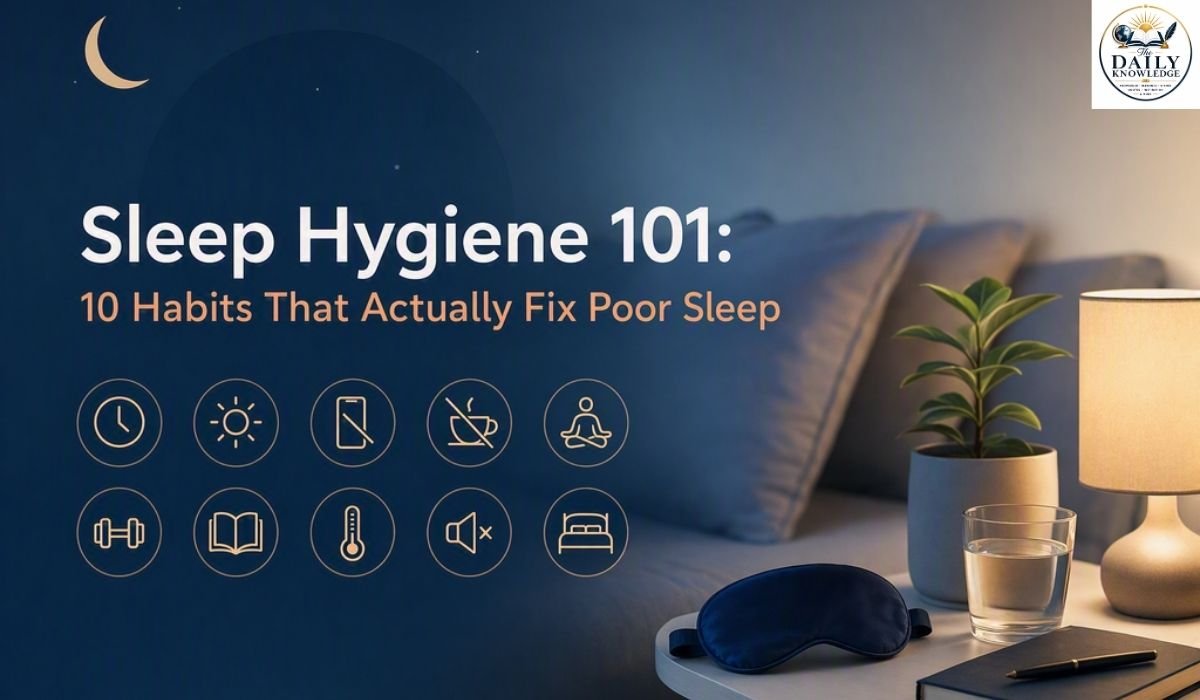
The 10 Sleep Hygiene Habits That Matter Most
1. Keep a Consistent Sleep Schedule
Your body runs on a circadian rhythm — an internal clock that governs when you feel alert or sleepy. Going to bed and waking at different times each night confuses this rhythm, which is one reason an inconsistent schedule can leave you tired even after a full night’s sleep.
Pick a realistic bedtime, not an ideal one. Adults generally need seven to nine hours; work backward from your actual wake time rather than aspiring to an earlier bedtime you won’t keep.
Limit weekend sleep-ins to about one extra hour. Sleeping until noon on Saturday creates what sleep researchers call “social jet lag” — your internal clock shifts, and Monday morning can feel like actual jet lag.
Adjust gradually. If your schedule is currently erratic, shift your bedtime by 15–30 minutes every few nights rather than all at once — small changes are easier to sustain.
2. Get Morning Light Exposure
Morning light is one of the strongest signals for your circadian rhythm. A 2024 daily diary study of U.S. adults found that morning sunlight exposure predicted better sleep quality that night, even though the duration of exposure mattered less than simply getting some. Getting outside, or at least near a bright window, within the first hour of waking helps your body clock distinguish day from night.
3. Create a Cool, Dark, Quiet Bedroom
Keep it cool and comfortable. Your core body temperature naturally drops before sleep, and an overly warm room can work against this. Most sleep guidance suggests a comfortably cool room rather than an overheated one — experiment to find what actually helps you.
Keep it dark. Blackout curtains block outside light that can interfere with your body’s natural wind-down signals.
Keep it quiet, or mask unavoidable noise with a white noise machine or fan.
4. Reserve Your Bed for Sleep
Working, scrolling, or watching TV in bed weakens the mental association between your bed and sleep. Over time, your brain may stop treating your bed as a strong cue for sleep, making it harder to wind down once you’re actually there.
5. Build a Wind-Down Routine
Give yourself a buffer between your day and your bedtime — reading, light stretching, or quiet music all work. The specific activity matters less than consistently signaling to your nervous system that the day is ending.
Write down tomorrow’s worries before you lie down. A lot of “can’t sleep” is unprocessed to-do lists running in the background. Spending five minutes journaling or listing tomorrow’s priorities can help get those thoughts out of your head before they keep you awake.
6. Reduce Evening Screen Exposure
Screens can affect sleep in more than one way—not just through blue light, but also through mental stimulation and by delaying bedtime as you keep scrolling. Engaging content (news, social media, video) can keep your mind alert well past when you intended to put the phone down. Reducing screen use in the hour before bed addresses all of these at once, not just the light exposure.
7. Limit Caffeine in the Afternoon
Caffeine’s half-life varies quite a bit between individuals — commonly cited as roughly 5–6 hours on average, though research shows it can range from 2 to 10 hours depending on genetics. A large systematic review and meta-analysis in Sleep Medicine Reviews found that even a standard cup of coffee reduced total sleep time when consumed as little as 8.8 hours before bedtime. If you’re sensitive to caffeine, moving your last cup earlier in the day is one of the simpler changes with an outsized effect.
8. Avoid Heavy Meals Close to Bedtime
Digesting a large or heavy meal while lying down increases the odds of discomfort and reflux, both of which can interrupt sleep. Finishing dinner a few hours before bed gives digestion time to settle first.
Be thoughtful with alcohol, too. A 2025 systematic review found that while alcohol can reduce the time it takes to fall asleep, it disrupts sleep architecture, suppresses REM sleep, and increases fragmentation — especially in the second half of the night. This is part of why a “nightcap” often leads to waking up around 3 a.m. feeling unrested.
9. Exercise Regularly
Regular physical activity is linked to better sleep quality overall. Timing matters for some people more than others — if vigorous exercise late at night makes it harder for you to wind down, try finishing it earlier in the day. If it doesn’t affect you, there’s no universal rule requiring you to stop by a specific hour.
10. Keep Naps Short and Early
Research on nap timing is more nuanced than the common advice suggests. A 2026 study on afternoon napping found that 25–90-minute naps taken between roughly 1–3 p.m. did not meaningfully disrupt that night’s sleep. The real risk factor is lateness and duration together — research on adolescents found that naps become detrimental mainly when they’re both long and late, delaying bedtime and shortening nighttime sleep. In short: an early, moderate nap is usually fine; a long nap that runs into early evening is the combination to avoid.
Who Should Pay Extra Attention to Sleep Hygiene
Everyone benefits from good sleep hygiene, but it matters more for certain groups:
- Shift workers — working overnight fights directly against your circadian rhythm, making consistent sleep habits (even on an unusual schedule) more important, not less.
- Older adults — falling and staying asleep naturally gets harder with age, so environmental fixes (temperature, light, noise) tend to have an outsized effect.
- People managing anxiety or depression — sleep problems and mental health conditions often reinforce each other, so improving sleep hygiene can meaningfully support treatment for both.
- Teenagers — natural shifts in teen circadian rhythms push bedtime later, which can clash with early school schedules; consistency still matters even when the “ideal” bedtime feels unrealistic.
When It’s Time to Talk to a Doctor
Sleep specialists note that one common pattern is spending a lot of time lying awake in bed — both before falling asleep and after waking early — which can reinforce wakefulness rather than sleep over time.
If you’ve consistently applied these habits for several weeks without improvement, that’s a sign the issue may go beyond everyday sleep hygiene — not a sign you’re doing something wrong. Persistent symptoms can point to insomnia or another sleep disorder that benefits from a proper evaluation. Consider talking to a doctor if you experience:
- Trouble falling asleep most nights for more than 3–4 weeks
- Loud snoring, gasping, or pauses in breathing during sleep (possible signs of sleep apnea)
- Waking multiple times a night, most nights
- Feeling exhausted despite consistently getting 7+ hours
Cognitive Behavioral Therapy for Insomnia (CBT-I) is a first-line treatment for chronic insomnia and can be highly effective for many people — it’s worth asking a doctor about directly rather than assuming medication is the only option.
Frequently Asked Questions
What is the fastest way to improve sleep hygiene?
Start with two changes: a consistent wake-up time (even on weekends) and reduced screen use in the hour before bed. These address some of the most common everyday disruptions.
Is it normal to need help beyond sleep hygiene?
Yes. Sleep hygiene helps many people, but chronic insomnia, sleep apnea, and other disorders need professional evaluation — good habits alone don’t resolve an underlying medical condition.
What is the 3-3-3 rule for sleep?
It’s a popular but informal guideline — commonly cited as avoiding heavy meals, screens, and stimulating activity a few hours before bed. It’s not an official medical rule, but the underlying principle of winding down before bed is well supported.
Does napping ruin nighttime sleep?
Not necessarily — short naps (20–30 minutes) earlier in the day are generally fine for most people. Long or late-afternoon naps are more likely to interfere with falling asleep that night.
How long does it take to fix bad sleep hygiene?
Some people notice a difference within a week of consistent changes; for others, especially with long-standing irregular schedules, it can take longer. If symptoms persist for several weeks despite consistent effort, it’s worth discussing with a doctor.
Final Thoughts
Better sleep often comes down to consistency with a handful of habits your body already knows how to respond to — a steady wake time, morning light, a wind-down routine, and a bedroom set up for rest. These changes genuinely help most people. But if you’ve applied them consistently and your sleep still isn’t improving, that’s a reasonable signal to talk to a doctor rather than a reflection of trying harder.

Azra Chattha is the founder and content creator of The Daily Knowledge. He is passionate about sharing inspiring blessings, prayers, quotes, wishes, and informative articles that educate, motivate, and bring positivity into people’s lives. His mission is to provide reliable, valuable, and easy-to-understand content that helps readers learn something new every day.
4 thoughts on “Sleep Hygiene 101: 10 Habits That Actually Fix Poor Sleep”