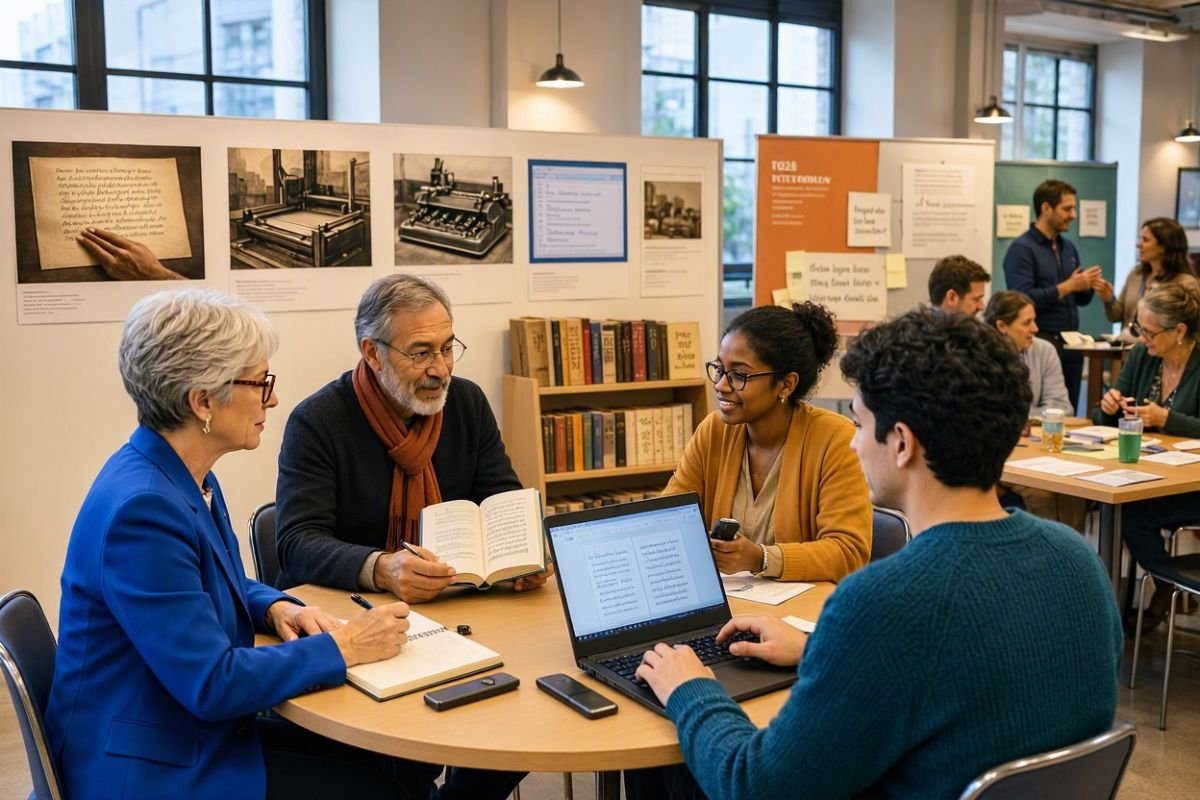
Every year on September 30, International Translation Day recognizes the work of translators, interpreters, and terminologists whose work quietly makes cross-border communication possible. In 2026, the observance falls on Wednesday, September 30, with this year’s theme focused on linguistic diversity and language rights.
This guide covers the day’s history, this year’s theme, the real difference between translation and interpretation, how it relates to the separate European Day of Languages, and practical ways to mark the day with a speech, poster, or classroom activity.
When Is International Translation Day 2026?

International Translation Day falls on September 30 every year. In 2026, that date lands on a Wednesday.
Why Is September 30 the Date?
September 30 marks the Feast of St. Jerome, widely regarded as the patron saint of translators. St. Jerome is best known for translating much of the Bible into Latin and for his mastery of Greek, Hebrew, and Latin. His Latin translation of the Bible became known as the Vulgate and became one of the most influential biblical translations in Western Christianity.
The History of International Translation Day
The International Federation of Translators (FIT), founded in 1953, has long represented translators, interpreters, and terminologists worldwide. FIT later advocated for official international recognition of the observance.
On May 24, 2017, the UN General Assembly adopted Resolution 71/288, formally recognizing the role of professional translators, interpreters, and terminologists in connecting nations and proclaiming September 30 as International Translation Day.
International Translation Day 2026 Theme
The 2026 theme is “Linguistic Diversity and Language Rights,” with “The Power of Being Understood” as its subtitle. The theme highlights the role of translation, interpreting, and terminology in supporting linguistic inclusion, equity, and participation.
It also connects naturally with the UN’s International Decade of Indigenous Languages (2022–2032), which focuses on preserving, revitalizing, and promoting Indigenous languages.
Translation vs. Interpretation: What’s the Difference?
The two terms get used interchangeably in everyday conversation, but they refer to distinct skill sets and professions.
| Translation | Interpretation |
| Works with written text | Works with spoken language |
| Usually allows time for research and revision | Often happens live or in real time |
| Books, documents, websites, and subtitles | Meetings, conferences, courts, healthcare, and other spoken settings |
A translator converts written material from one language into another, often with time to check terminology and refine wording. An interpreter converts spoken language in real time, which requires not just fluency but a strong grasp of tone, context, and cultural nuance in the moment, often with little or no opportunity to pause and revise.
Some professionals do both, but they are genuinely different disciplines. Both translators and interpreters are recognized as part of International Translation Day, alongside terminologists.
How International Translation Day Is Marked
Observance varies by organization and country, generally centered on recognition and professional development rather than a single official ceremony.
- The UN St. Jerome Translation Contest. Launched by the United Nations in 2005 to commemorate International Translation Day, the contest celebrates multilingualism and highlights the role of translation in the work of the United Nations and beyond.
- Workplace recognition. Businesses with multilingual staff or international clients may use the day to recognize translators and interpreters on their teams or invest in better translation services.
- Educational events. Schools and universities may host workshops, panel discussions, or translation exercises tied to the day.
- Industry webinars and training. Language service providers and professional associations, including the International Federation of Translators and national translator associations, may run webinars or offer training around this time of year.
International Translation Day Speech Ideas
A short speech for the day works well when it grounds the abstract idea of “language connects us” in something concrete. A few angles that tend to work well:
- Open with the St. Jerome origin story to explain why the date itself carries meaning, not just the observance.
- Use the translation vs. interpretation distinction to highlight two different skill sets rather than treating language work as one single job.
- Reference this year’s theme, linguistic diversity and language rights, to connect the day to a larger conversation about language preservation and inclusion.
- Close by naming specific real-world contexts where translation matters. Healthcare, legal proceedings, emergency response, and diplomacy are all strong examples.
International Translation Day Poster and Activity Ideas
For a poster or classroom display, pairing a simple fact, such as the number of languages spoken worldwide, with a short, clear message can work better than a long paragraph.
For activities, a few practical options include:
- A short translation exercise, translating a simple paragraph or phrase into multiple languages represented in a classroom or workplace.
- A “language of the day” feature, spotlighting one language’s history or notable characteristics.
- A discussion of a mistranslation case study, since real examples of miscommunication can make the value of accurate translation memorable.
- A simple interpretation demonstration, showing the difference between translation and live interpretation in practice.
Is International Translation Day the Same as European Day of Languages?
No, they are two separate observances, although they fall close together on the calendar and share a similar spirit.
International Translation Day, held September 30, is a UN-recognized observance specifically honoring translators, interpreters, and terminologists as professionals. European Day of Languages, held September 26, is a Council of Europe initiative, first observed in 2001, focused more broadly on encouraging language learning and celebrating Europe’s linguistic diversity rather than honoring language professionals specifically.
European Day of Languages was established following the Council of Europe’s 2001 European Year of Languages, a joint initiative with the European Union. Today, it promotes linguistic diversity, multilingualism, and intercultural understanding across Europe.
Its 2026 theme is “Languages Unite!”, a separate theme from International Translation Day’s 2026 focus on linguistic diversity and language rights.
Frequently Asked Questions
When is International Translation Day in 2026?
It falls on Wednesday, September 30, 2026, the same date it is observed every year.
What is the theme of International Translation Day 2026?
The 2026 theme is “Linguistic Diversity and Language Rights,” with “The Power of Being Understood” as its subtitle. The theme highlights the importance of language access, linguistic diversity, and the role of translation, interpreting, and terminology in helping people communicate and participate across languages.
Why is September 30 International Translation Day?
The date marks the Feast of St. Jerome, the patron saint of translators, who is best known for his Latin translation of the Bible.
Is there a separate International Interpreter Day?
There isn’t a UN-recognized day specifically for interpreters that is separate from International Translation Day. Interpreters are recognized as part of the same broader observance, alongside translators and terminologists.
What’s the difference between International Translation Day and European Day of Languages?
International Translation Day, held September 30, is a UN observance honoring translation professionals specifically. European Day of Languages, held September 26, is a separate Council of Europe initiative focused on encouraging language learning, multilingualism, and linguistic diversity across Europe.
Conclusion
International Translation Day exists to put a name to work that mostly stays invisible when it is done well. Whether through a formal UN resolution, professional recognition, or a simple classroom activity, the day is a reminder that understanding across languages does not happen automatically; people make it possible.
From healthcare and legal proceedings to education and international diplomacy, translators, interpreters, and terminologists help people communicate across linguistic and cultural boundaries. International Translation Day 2026 provides an opportunity to recognize that work while reflecting on the importance of linguistic diversity and language rights.

Azrar Chattha is the founder and content creator of The Daily Knowledge. He is passionate about sharing inspiring blessings, prayers, quotes, wishes, and informative articles that educate, motivate, and bring positivity into people’s lives. His mission is to provide reliable, valuable, and easy-to-understand content that helps readers learn something new every day.